Football Training Drills PDF: A Comprehensive Plan
This document details a comprehensive football training program, incorporating drills for all skill levels. It references schedules like the Collins Titans’ 2025 season and advancements in football gaming,
like eFootball’s evolution.
Football training drills are the cornerstone of player development, bridging the gap between theoretical knowledge and practical execution on the field. A well-structured drill program, often compiled into a football training drills PDF, provides coaches and players with a repeatable, measurable framework for improvement. These drills aren’t simply about physical exertion; they’re about building football IQ, refining technique, and fostering teamwork.
The evolution of football, mirrored in advancements like the Fox Engine powering the PES/eFootball series, emphasizes realism and skill. Similarly, modern training drills focus on replicating game-like scenarios. Consider the Collins Titans’ 2025 schedule – each game demands preparation, and drills are the primary method.
A comprehensive PDF will cover all facets of the game, from fundamental skills to complex strategies. The 30th-anniversary celebration of the eFootball series highlights the continuous refinement of the sport, and training drills must adapt accordingly. Effective drills are progressive, building upon foundational movements and skills to create well-rounded, adaptable players. They are essential for success at all levels of play.
II. Understanding the Importance of Drills
Drills are paramount in football because they isolate specific skills, allowing for focused repetition and correction. A football training drills PDF serves as a blueprint for this focused development, ensuring no crucial element is overlooked. Without consistent, purposeful drills, players struggle to translate game plans into effective on-field performance.
The dedication to realism seen in football gaming, like the transition from PES to eFootball, underscores the importance of precise execution. Similarly, drills demand precision. They build muscle memory, enhance reaction time, and improve decision-making under pressure – all vital for mirroring the intensity of a game like those on the Collins Titans’ 2025 schedule.
Furthermore, drills foster a culture of discipline and accountability. The industry-leading Fox Engine’s improvements reflect a commitment to detail, and a well-designed PDF embodies that same principle. Celebrating milestones, like eFootball’s 30th anniversary, reminds us of the sport’s evolution, and drills must evolve with it, continually challenging players to reach their full potential.
III. Key Components of Effective Drills
A successful football training drills PDF isn’t just a collection of exercises; it’s a carefully structured program. Key components include clear objectives – each drill should target a specific skill, mirroring the precision found in modern football gaming like eFootball. Progressive overload is crucial; drills must gradually increase in difficulty, challenging players without overwhelming them.
Realistic simulation is also vital. Drills should mimic game situations, preparing players for the demands of a schedule like the Collins Titans’ 2025 season. This requires incorporating elements of speed, agility, and decision-making. Feedback mechanisms are essential – coaches must provide constructive criticism, helping players refine their technique.
Finally, a good PDF emphasizes safety. Proper warm-up and cool-down routines, as well as appropriate equipment, are non-negotiable. Just as the Fox Engine prioritizes a realistic and immersive experience, effective drills prioritize player well-being. Celebrating football’s history, like eFootball’s 30th anniversary, reminds us of the importance of preserving the game for future generations through safe and effective training.
IV. Warm-Up Drills
Prior to skill work, dynamic warm-ups are essential. These prepare muscles for exertion, mirroring the game readiness emphasized in modern football simulations like eFootball.
V. Dynamic Stretching for Football
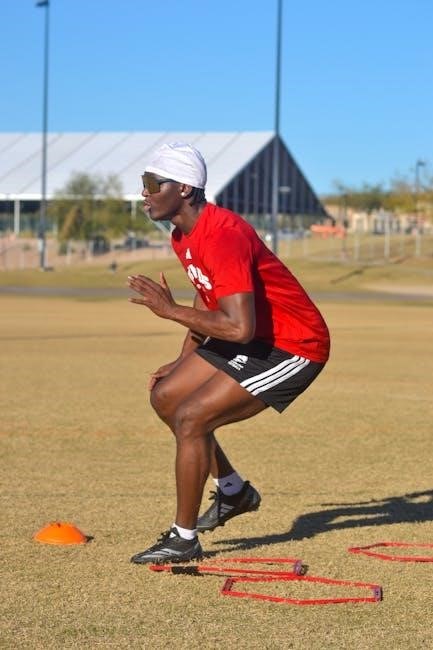
Dynamic stretching is a crucial component of any effective football warm-up routine, far surpassing the benefits of static stretching before activity. Unlike holding a stretch for an extended period, dynamic stretches involve controlled movements that gradually increase range of motion and prepare muscles for the demands of the game.
Examples include leg swings (forward, backward, and lateral), arm circles, torso twists, high knees, butt kicks, and walking lunges with a twist. These movements not only increase flexibility but also improve blood flow, enhance neuromuscular activation, and prime the body for explosive movements required in football.

A proper dynamic stretching routine should last approximately 10-15 minutes and progressively increase in intensity. It’s vital to focus on movements that mimic football-specific actions, such as hip mobility for cutting and agility, and shoulder mobility for throwing and tackling. Consider the advancements in realistic movement seen in games like eFootball – players require a full range of motion!
Integrating dynamic stretching into your training regimen will reduce the risk of injury, improve performance, and ultimately contribute to a more successful and enjoyable football experience. Remember to maintain proper form throughout each exercise to maximize benefits and avoid strain.
VI. Agility Ladder Drills
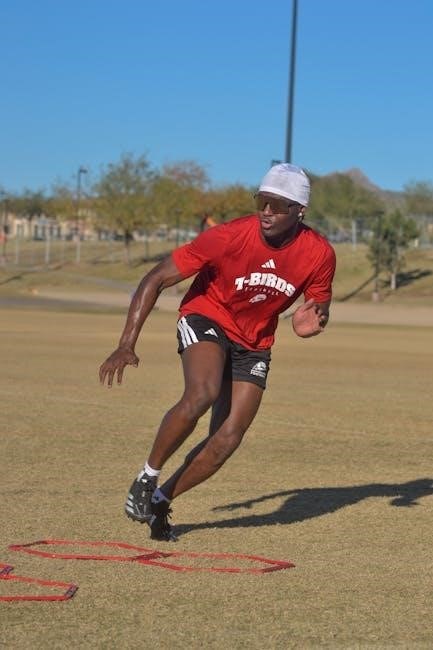
Agility ladder drills are a cornerstone of football training, designed to enhance footwork, coordination, and quickness – essential attributes for success on the field. These drills involve a variety of stepping patterns through the ladder rungs, challenging players to maintain speed and precision.
Common drills include the in-in-out-out, lateral shuffle, Icky Shuffle, and hopscotch variations. Coaches can progressively increase the difficulty by demanding faster footwork, adding arm movements, or incorporating changes in direction. The focus should be on maintaining a low center of gravity and quick, choppy steps.

The benefits extend beyond simply improving foot speed. Agility ladder drills also enhance cognitive processing, as players must react quickly to the changing patterns. This mirrors the split-second decision-making required during a game, much like the responsiveness demanded in modern football simulations like eFootball.
Effective implementation involves starting with slower, controlled movements and gradually increasing the tempo as players become more comfortable. Proper technique is paramount to prevent injuries and maximize the drill’s effectiveness. Consistent practice will translate to improved agility and responsiveness on the football field.
VII. Cone Drills for Footwork
Cone drills represent a versatile and highly effective method for developing footwork, agility, and change-of-direction skills crucial for football performance. Utilizing cones allows coaches to create a multitude of drill patterns, catering to specific positional needs and skill development goals.
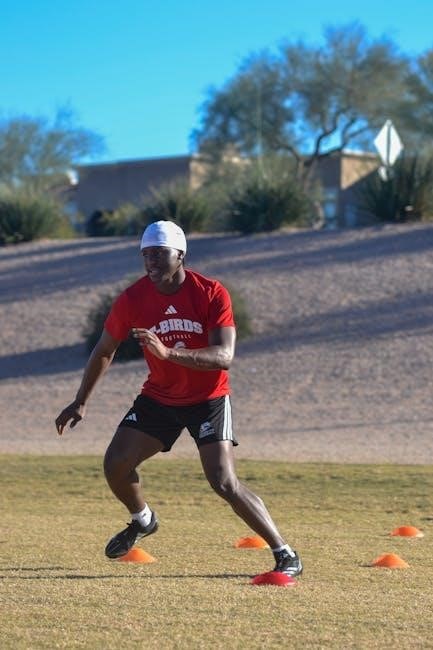
Popular drills include the three-cone drill (a standard NFL Combine test), L-drills, and shuttle runs. Variations can incorporate backpedaling, lateral movements, and explosive bursts of speed. The emphasis is on maintaining a low athletic stance, quick footwork, and precise cuts around the cones.
These drills directly translate to game-like scenarios, improving a player’s ability to evade defenders, navigate traffic, and quickly change direction during routes or defensive pursuits. Just as eFootball aims for realistic player movement, cone drills build the foundational skills for that realism on the field.
Successful implementation requires proper cone placement and clear instructions. Coaches should emphasize maintaining speed throughout the drill while executing sharp, controlled turns; Regular practice and progressive overload will yield significant improvements in footwork and agility, enhancing overall football performance.

VIII. Skill-Specific Drills: Offense
Offensive drills focus on refining techniques for passing, receiving, running, and blocking. These drills, like those powering eFootball, aim to maximize player capabilities and team coordination.
IX. Passing Drills (Short & Long)
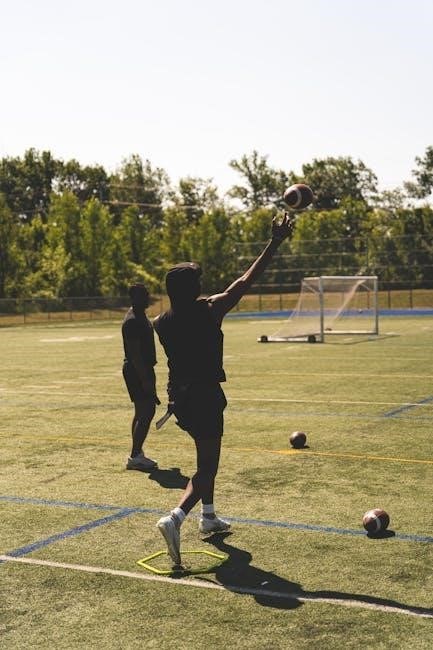
Passing drills are foundational for offensive success, demanding precision and timing. Short passing drills emphasize quick releases, accuracy to nearby targets, and route running synchronization. Quarterbacks practice reading defenses and making rapid decisions, while receivers focus on creating separation and securing catches in traffic. These drills often begin with stationary throws, progressing to throws on the move.
Long passing drills build arm strength and deep-ball accuracy. Quarterbacks work on throwing with proper mechanics and trajectory, accounting for wind resistance and receiver speed. Receivers concentrate on tracking the ball, adjusting to its flight path, and making contested catches. Drills incorporate varying distances and receiver routes, simulating game-like scenarios.
Progression is key; start with simple routes and gradually increase complexity. Coaches should provide immediate feedback on technique, emphasizing proper footwork, arm angle, and follow-through. Utilizing cones and targets can enhance accuracy. Remember, as seen in advancements like eFootball, realistic simulation requires mastering fundamental skills, and passing is paramount.
X. Receiving Drills (Hands & Body Control)
Effective receiving transcends simply catching the ball; it demands exceptional hand-eye coordination, body control, and concentration. Drills begin with basic hand drills, focusing on soft hands and secure catches, progressing to catching passes thrown with increasing velocity and varying trajectories. Emphasis is placed on catching with the hands away from the body, creating a secure pocket.
Body control drills challenge receivers to make catches in contested situations, adjusting their bodies to secure the ball while maintaining balance. These drills incorporate routes with sharp cuts, requiring receivers to quickly change direction and maintain focus. Coaches often use defensive backs to simulate pressure and create realistic game scenarios.
Drills should also address catching passes while running at full speed, simulating deep routes and broken plays. Like the precision required in modern football gaming, such as eFootball, receivers must react instinctively. Consistent repetition and constructive feedback are crucial for developing reliable receiving skills. Mastering these drills builds confidence and maximizes receiving potential.
XI. Running Back Drills (Agility & Vision)
Developing a successful running back requires a blend of explosive power, agility, and exceptional vision. Drills begin with cone drills, emphasizing quick feet, lateral movement, and the ability to change direction rapidly – mirroring the responsiveness seen in advanced football simulations like eFootball. These drills improve a back’s ability to navigate tight spaces and evade defenders.
Vision drills focus on reading blocking schemes and identifying running lanes. This involves practicing with varying blocking formations and reacting to defensive movements. Coaches often use visual cues and verbal commands to challenge the running back’s decision-making skills. Incorporating a “tunnel vision” drill, where the back focuses solely on a designated lane, then quickly adjusts to open space, is beneficial.
Agility ladders and shuttle runs further enhance footwork and acceleration. Finally, drills simulating game-like scenarios, such as receiving handoffs and making quick cuts, solidify these skills. Consistent practice, similar to a team preparing for a schedule like the Collins Titans’, is key to developing a versatile and effective running back.
XII. Offensive Line Drills (Blocking Techniques)
Mastering blocking techniques is fundamental for any successful offensive line. Drills begin with stance and footwork, emphasizing a low center of gravity, quick first steps, and proper weight distribution. Mirror drills, where linemen face each other and practice maintaining position while mirroring their opponent’s movements, are crucial for developing technique.
Next, focus shifts to hand placement and engagement. Drills involve practicing various blocking schemes – drive blocking, pass protection, and pull-blocking – with emphasis on proper hand positioning and leverage. Utilizing sled drills builds strength and reinforces proper blocking form. These drills simulate the physical demands of the game, mirroring the realism sought in football simulations like eFootball.
Teamwork drills are essential, requiring linemen to work in unison to execute blocking assignments. Communication drills, involving clear and concise calls, enhance coordination. Consistent repetition, akin to a team preparing for a demanding schedule like the Collins Titans’, builds muscle memory and ensures effective blocking execution.
XIII. Skill-Specific Drills: Defense
Defensive drills focus on pass rush, run stopping, coverage, and tackling. These build skills mirroring the advancements in football gaming, like those found in eFootball, demanding precision and strategy.
XIV. Defensive Line Drills (Pass Rush & Run Stop)
Defensive line drills are crucial for developing players who can disrupt offenses. Pass rush drills emphasize quickness, hand technique, and exploiting offensive line weaknesses. These include one-on-one pass rush simulations, focusing on swim moves, rip moves, and bull rushes. Repetition is key to building muscle memory and reaction time.
Run stop drills concentrate on maintaining gap integrity, shedding blocks, and tackling effectively. Drills involve reading offensive formations, quickly diagnosing the play, and aggressively pursuing the ball carrier. Emphasis is placed on proper tackling form to minimize injuries and maximize impact.
Cone drills can be incorporated to improve agility and footwork, essential for both pass rush and run stopping. Partner drills allow linemen to practice against live opponents, simulating game-like scenarios. The goal is to create a relentless defensive line capable of consistently pressuring the quarterback and shutting down the running game, mirroring the strategic depth found in modern football simulations like eFootball.
Regularly assessing performance and providing constructive feedback is vital for continuous improvement.
XV. Linebacker Drills (Coverage & Tackling)
Linebacker training demands versatility, encompassing both coverage skills and aggressive tackling. Coverage drills focus on dropping into zones, reading quarterbacks, and intercepting passes; Shuttle runs and backpedal drills enhance lateral movement and change-of-direction ability, crucial for staying with receivers.
Tackling drills emphasize proper form, wrapping up securely, and driving through the ball carrier. These drills progress from tackling dummies to live tackling situations, prioritizing safety and technique. Angle tackling drills teach linebackers to efficiently close the distance and make impactful stops.
Film study is integrated to improve recognition of offensive formations and play patterns, mirroring the strategic awareness demanded in games like eFootball. Agility ladder drills improve footwork and quickness, while cone drills enhance change-of-direction skills. Partner drills simulate pass coverage scenarios and run-stopping assignments.
Developing instincts and reaction time is paramount. Consistent practice and detailed coaching are essential for creating linebackers who can excel in all facets of the game.
XVI. Defensive Back Drills (Coverage & Interception)

Defensive back training prioritizes speed, agility, and ball skills. Coverage drills begin with mirroring receiver movements during one-on-one drills, emphasizing proper technique and maintaining leverage. Backpedaling, shuffling, and quick breaks are fundamental skills honed through repetition.
Interception drills focus on reading the quarterback’s eyes, anticipating throws, and securing the catch. These drills progress from stationary catches to intercepting passes while in coverage. Route recognition drills improve the ability to predict receiver paths and position oneself for an interception.
Agility ladder and cone drills enhance footwork and change-of-direction speed, mirroring the responsiveness needed in modern football, much like the quick reactions demanded in games such as eFootball. Partner drills simulate press coverage, zone coverage, and man-to-man assignments.
Developing a competitive mindset and a relentless pursuit of the ball are crucial. Consistent practice, combined with detailed coaching, builds confidence and elevates performance.
XVII. Conditioning Drills
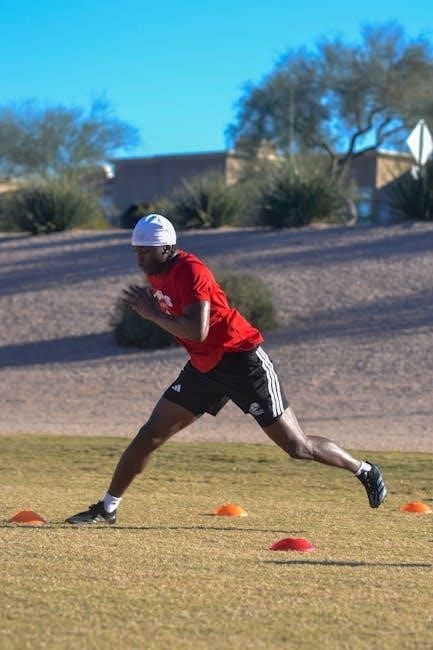
Essential for peak performance, conditioning builds stamina and explosive power. Drills include sprints, endurance runs, and plyometrics – mirroring the demands of a full game, like those in eFootball.
XVIII. Sprint Drills (Speed & Acceleration)
Sprint drills are foundational for football, demanding explosive power and rapid acceleration. These drills focus on improving a player’s ability to reach top speed quickly, crucial for both offensive and defensive plays. Begin with short sprints – 10 to 20 yards – emphasizing a strong initial drive and proper form. Players should focus on a low center of gravity, powerful arm action, and driving their knees high.
Progress to longer sprints, incorporating varied starting positions – two-point stance, three-point stance, and even reacting to a visual cue. Shuttle runs, involving sprints between designated points, enhance agility alongside speed. Consider incorporating resisted sprints using sleds or resistance bands to build strength and power.
Interval training, alternating between high-intensity sprints and periods of rest or low-intensity jogging, is vital for building endurance alongside speed. Monitoring sprint times and tracking progress is essential. Remember, proper warm-up and cool-down routines are critical to prevent injuries, mirroring the importance of game preparation seen in titles like eFootball, where player condition impacts performance.
XIX. Endurance Runs (Stamina Building)
Endurance runs are paramount for football players, enabling sustained high-intensity performance throughout a game. Unlike short sprints, these drills prioritize cardiovascular fitness and the ability to recover quickly between plays. Begin with base-building runs – steady-state jogging for 20-30 minutes – to establish a foundation of aerobic capacity.
Introduce interval runs, alternating between periods of high-intensity running and recovery jogging. Fartlek training, Swedish for “speed play,” offers a dynamic approach, varying pace and distance spontaneously. Hill repeats are exceptionally effective, building both endurance and leg strength. Longer, slower distance runs (45-60 minutes) can be incorporated weekly to further enhance stamina.
Consider incorporating football-specific conditioning, such as running routes at game speed or simulating game scenarios with continuous movement. Monitoring heart rate and perceived exertion is crucial for gauging intensity. Just as the Fox Engine in PES/eFootball simulates realistic player fatigue, these drills aim to prepare players for the physical demands of a full game, mirroring the need for consistent performance.
XX. Plyometric Drills (Explosive Power)
Plyometric drills are essential for developing the explosive power needed for bursts of speed, powerful tackles, and high jumps in football. These exercises focus on the stretch-shortening cycle – rapidly stretching a muscle followed by an immediate contraction. Begin with foundational exercises like jump squats, box jumps (starting with low boxes), and lateral bounds.
Progress to more advanced drills such as depth jumps (jumping off a box and immediately jumping again), single-leg hops, and medicine ball throws. Proper form is critical to prevent injuries; emphasize landing softly and maintaining core stability. Incorporate drills that mimic football movements, like simulating a lineman’s first step or a receiver’s jump for a catch.
Similar to the improvements in the eFootball series aiming for “real football” experience, plyometrics strive to translate training into game-specific power. Volume should be carefully managed, as plyometrics are taxing on the nervous system. Adequate rest and recovery are vital. Focus on quality over quantity, ensuring each repetition is performed with maximum effort and control.
XXI. Game Situation Drills
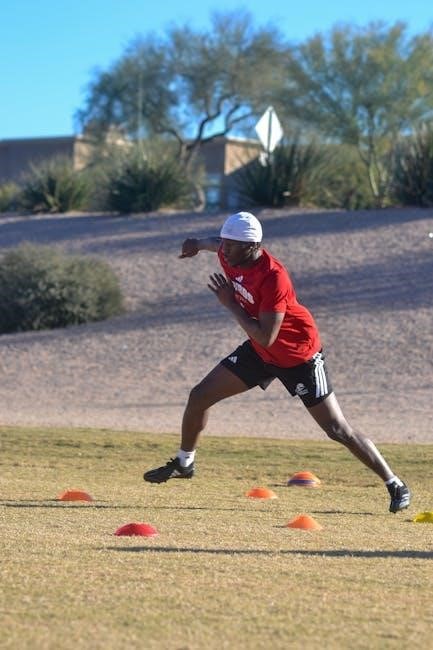
These drills replicate in-game scenarios, like red zone offenses and special teams plays, mirroring the strategic depth found in football games such as eFootball. They build decision-making skills.
XXII. Red Zone Drills (Scoring Practice)
Red zone drills are crucial for maximizing scoring opportunities within the opponent’s 20-yard line. These drills focus on precision passing, quick decision-making, and effective route running in a condensed space. Begin with 7-on-7 scenarios, emphasizing play-action passes and short, accurate throws to receivers.
Progress to full team drills, incorporating offensive line blocking schemes designed for tight quarters. Running back drills should concentrate on finding seams and displaying burst through congested areas. Defensive players simulate intense pressure, forcing quarterbacks to make quick reads and deliver the ball under duress.
Variations include goal-line stands, focusing on power running and goal-line fades. Coaches should emphasize ball security and proper technique to prevent turnovers. Successful execution requires a blend of physicality and finesse, mirroring the high-stakes nature of real game situations. Remember, like the advancements in eFootball, precision and strategy are key to success.
Regularly assess drill performance, providing constructive feedback to improve execution and enhance scoring efficiency. These drills prepare players for the critical moments that often determine game outcomes.
XXIII. Special Teams Drills (Kickoffs & Punts)
Special teams drills are often overlooked, yet they significantly impact field position and scoring opportunities. Kickoff drills should focus on maximizing distance and hang time, while emphasizing coverage team speed and tackling technique. Practice different kickoff formations and return schemes to prepare for various opponent strategies.
Punt drills prioritize accuracy, distance, and directional punting. Punters should work on consistently hitting target areas, while the punt return team focuses on secure catches and efficient blocking. Coverage team members practice getting downfield quickly and making tackles within bounds.
Scrimmage situations simulating kickoff and punt returns are essential. These drills allow players to practice live coverage and returns, refining their reactions and decision-making skills. Like the real-time strategy found in modern football gaming, such as eFootball, quick adaptation is vital.
Don’t neglect field goal and extra point practice, focusing on snapping, holding, and kicking consistency. Regular repetition builds confidence and improves overall special teams performance, potentially swinging game momentum.
XXIV. Cool-Down and Recovery Drills
Effective cool-down and recovery are crucial components of any football training regimen, often underestimated despite their importance in preventing injuries and maximizing performance. Following intense drills, a gradual cool-down period helps the body transition back to a resting state.
Light jogging and dynamic stretching, mirroring the principles of a proper warm-up, aid in removing lactic acid buildup from muscles. Static stretching, holding each stretch for 20-30 seconds, improves flexibility and reduces muscle soreness. Foam rolling targets specific muscle groups, releasing tension and promoting recovery.
Hydration is paramount; players should replenish fluids lost during training. Nutritional intake, focusing on protein and carbohydrates, supports muscle repair and glycogen restoration. Similar to the dedication required in mastering a game like eFootball, consistent recovery builds long-term resilience.
Active recovery days, involving light activities like swimming or cycling, further enhance recovery. Prioritizing sleep allows the body to fully repair and rebuild, ensuring players are prepared for subsequent training sessions.
No Responses